
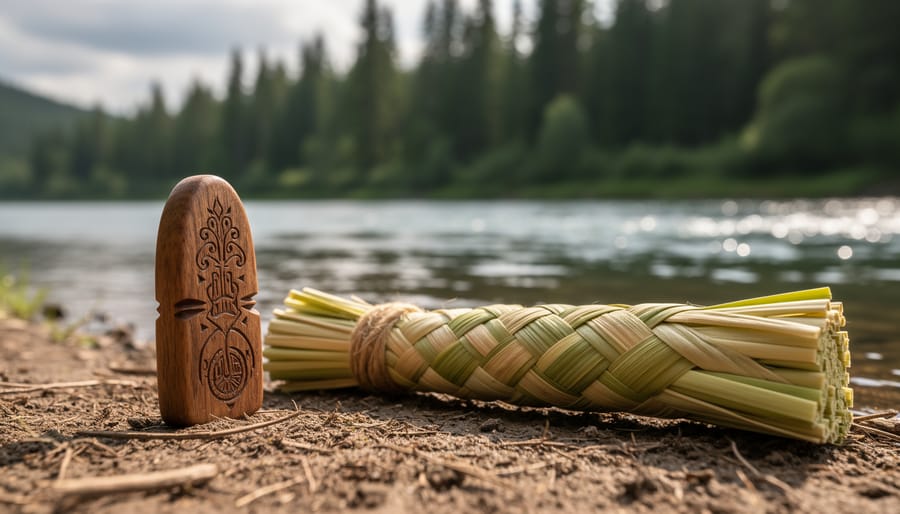
Cultural perspectives are the lenses through which people understand and interpret the world around them, shaped by their values, beliefs, traditions, and lived experiences within a particular community or society. These perspectives determine how we make sense of everything from daily interactions to major life events, influencing our decisions, relationships, and understanding of right and wrong.
Understanding cultural perspectives matters because it reveals how diverse communities see the world differently, and why those differences deserve recognition and respect. For Indigenous peoples across Canada, cultural perspectives are rooted in thousands of years of connection to land, water, and complex systems of knowledge that have sustained communities long before European contact. These worldviews are not relics of the past. They remain living, evolving frameworks that guide contemporary Indigenous nations in areas ranging from environmental stewardship to education, governance, and healthcare.
The gap between how many Canadians have been taught to view history and how Indigenous peoples understand their own stories has created lasting misunderstandings and harm. Bridging that gap requires more than acknowledgment. It demands that educators, museum professionals, students, and anyone engaging with Canadian history develop literacy in how cultural perspectives shape knowledge itself.
This article provides a foundational guide to cultural perspectives with specific attention to Indigenous worldviews. You’ll learn how these perspectives function as complete systems of understanding, discover the diversity among Indigenous nations and their distinct ways of knowing, and explore practical applications in education, cultural institutions, and reconciliation work. The goal is to equip you with the conceptual tools to recognize that there are many valid ways of understanding the world, and that Indigenous Cultural Perspectives offer essential wisdom for addressing contemporary challenges facing all Canadians.
What Cultural Perspectives Are
Cultural perspectives are the interpretive frameworks people use to make sense of the world around them. These frameworks develop through a lifetime of experiences within specific communities, shaped by traditions, languages, values, and relationships that provide meaning to everything from daily interactions to historical events. Think of them as the glasses through which you view reality, not something you consciously put on each morning, but rather something so integrated into your being that it feels like simply seeing things as they are.
Unlike personal opinions, which can shift with new information or changing moods, cultural perspectives run deeper. They represent collective ways of understanding passed down through generations and reinforced through community practices. When an Elder teaches through story, when a language contains concepts that have no direct translation, when a ceremony connects past and present, these experiences build and maintain cultural perspectives that shape how entire communities interpret their place in the world.
- Cultural Perspectives
- The interpretive frameworks shaped by community traditions, languages, and experiences that influence how people understand events, relationships, and meaning.
- Worldview
- A comprehensive perspective on existence encompassing beliefs about creation, relationships between beings, and humanity’s role within the natural and spiritual worlds.
- Epistemology
- The study of how knowledge is acquired, validated, and understood, which varies significantly across cultures in terms of what counts as evidence and who holds authority to share knowledge.
- Cultural Lens
- The specific vantage point from which individuals and communities interpret experiences, filter information, and construct understanding of the world around them.
These perspectives fundamentally influence how people understand cause and effect, value different forms of knowledge, and interpret the same historical event in vastly different ways. Two people can witness identical circumstances yet carry away entirely different understandings based on their cultural frameworks. For Indigenous peoples in Canada, perspectives rooted in millennia of observation, relationship with specific territories, and oral traditions often contrast sharply with settler perspectives built on written documentation, individual land ownership, and linear conceptions of progress. Neither represents opinion; both reflect deeply held ways of knowing the world.
How Cultural Perspectives Work
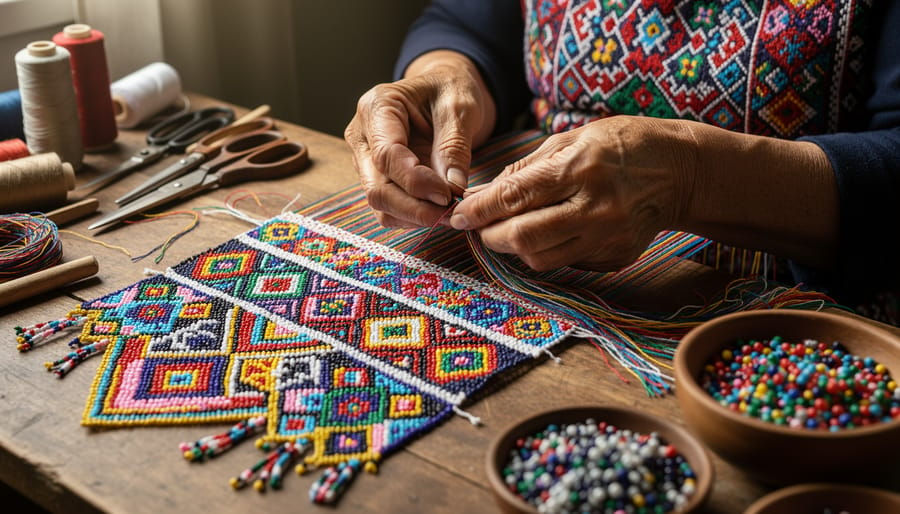
The Role of Language and Storytelling
Indigenous languages encode worldviews that resist direct translation into English or French. Many Indigenous languages structure time, relationship, and action in fundamentally different ways, Cree, for instance, uses verb-based constructions that emphasize process and relationality rather than fixed objects. When a language lacks a word for “ownership” but contains multiple terms describing responsibilities to land, it reflects and reinforces a distinct cultural perspective on territory and stewardship.
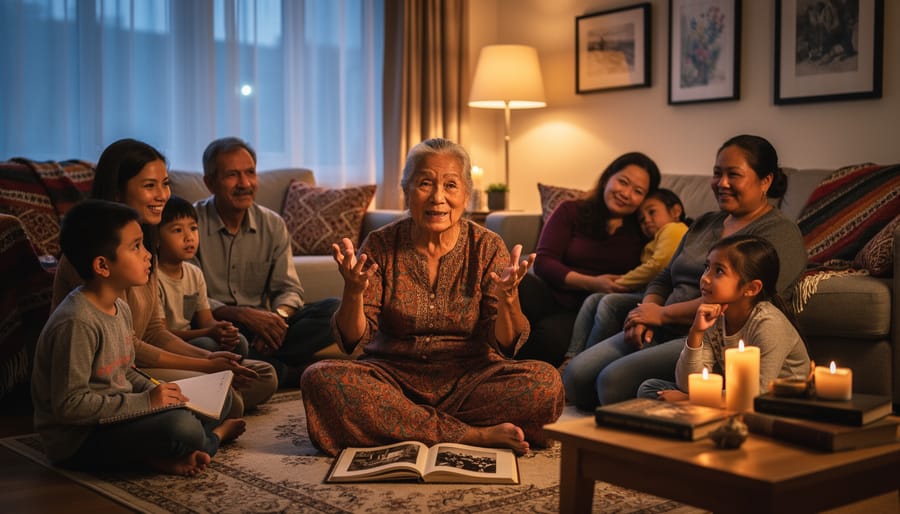
Storytelling serves as the primary vehicle through which oral tradition preserves knowledge across generations. Unlike written records that fix events in linear chronology, oral histories embed teachings within narratives that adapt to context while maintaining core truths. A story told to children carries different layers than the same story shared among Elders, revealing deeper meanings as listeners mature in understanding.
This oral transmission shapes how communities remember and interpret history. Stories connect past events to present circumstances, showing patterns and relationships that written documentation often misses. The teller’s voice, timing, and audience interaction become part of the knowledge itself, elements lost when oral accounts are merely transcribed as text.
The relationship between language and perspective explains why translation can never fully capture Indigenous concepts. Words like “treaty” carry profoundly different meanings in Anishinaabemowin than in English, reflecting different understandings of the agreements themselves. Language doesn’t just label cultural perspectives; it creates and sustains them.
Land as Teacher
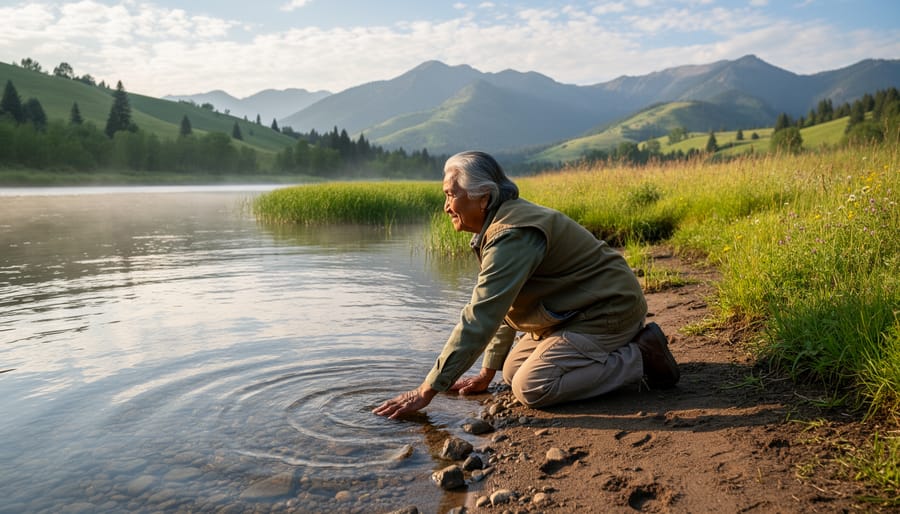
For many Indigenous peoples across Canada, land is not property to own or a resource to extract, it is a land as active teacher that holds knowledge, stories, and spiritual significance. This fundamental relationship shapes cultural perspectives in ways that often contrast sharply with settler worldviews rooted in ownership and economic value.
Indigenous knowledge systems develop through direct, sustained interaction with specific territories. The land teaches through observation of seasonal cycles, animal behavior, plant properties, and ecological relationships. An elder teaching a young person to read weather patterns from cloud formations or identify medicinal plants by their location demonstrates how the land itself transmits knowledge. These teachings aren’t abstract lessons but practical wisdom tied to place, passed down through generations who have lived in relationship with the same territories for millennia.
This perspective differs fundamentally from viewing land as a commodity or blank space for development. Where settler perspectives historically emphasized transformation and extraction, clearing forests, damming rivers, surveying boundaries, Indigenous perspectives emphasize reciprocity and responsibility. The land provides; people must give back through respectful use, ceremony, and stewardship that ensures balance for future generations.
Understanding this relationship helps explain why many Indigenous communities view environmental decisions through a lens of kinship rather than ownership, and why displacement from traditional territories represents not just loss of property but severing of a teaching relationship central to cultural identity and knowledge transmission.
Types and Components of Indigenous Cultural Perspectives
First Nations Perspectives Across Regions
The diversity of First Nations cultural perspectives across Canada reflects the profound relationship between Indigenous peoples and their traditional territories. Each nation’s worldview has been shaped by millennia of living in specific landscapes, developing knowledge systems uniquely suited to their environments.
Coastal First Nations, including the Haida, Tlingit, and Coast Salish peoples, developed cultural perspectives centered on the abundance and rhythms of ocean and forest. Their governance systems, artistic traditions, and spiritual practices reflect intimate knowledge of salmon migrations, tidal patterns, and cedar forests. The potlatch ceremony exemplifies how coastal perspectives interweave social structure, economic redistribution, and spiritual practice.
Plains nations such as the Blackfoot, Cree, and Dakota maintain perspectives shaped by vast grasslands and the buffalo that sustained their ancestors. Their knowledge encompasses seasonal movements, weather patterns, and relationships with prairie ecosystems. The concept of the medicine wheel, while interpreted differently among nations, reflects cyclical understanding of time, seasons, and life stages.
Woodland First Nations like the Anishinaabe and Haudenosaunee developed perspectives rooted in forest ecosystems, with teachings transmitted through clan systems and wampum belts. Northern nations including the Dene and Gwich’in maintain worldviews adapted to subarctic environments, where survival depends on detailed knowledge of caribou migrations, ice conditions, and extended seasonal cycles.
Each regional perspective offers distinct approaches to governance, teaching, land stewardship, and community relationships, shaped by place yet connected through shared values of reciprocity and respect.
Métis Worldviews
Métis cultural perspectives emerge from a unique historical foundation where Indigenous and European ways of knowing intersect to create something entirely distinct. This worldview isn’t simply a combination of two separate perspectives but rather a synthesis that has evolved over generations into its own system of understanding relationships with land, community, and identity.
Central to Métis perspectives is the concept of being “people in between”, not as a position of cultural confusion but as a source of strength and adaptability. This positioning has historically enabled Métis communities to serve as interpreters and bridge-builders while maintaining their own distinct cultural identity. The Métis relationship with land reflects this synthesis: practices like seasonal rounds for bison hunting or river lot systems demonstrate knowledge systems that draw from both Indigenous land-based teachings and European agricultural approaches, adapted specifically to prairie and northern environments.
Language embodies this distinctive perspective. Michif, spoken by many Métis, combines Cree verbs with French nouns, a linguistic structure that mirrors the cultural blending at the heart of Métis identity. Community governance structures, spiritual practices, and artistic traditions similarly reflect this synthesis, creating cultural perspectives that are neither wholly Indigenous nor European but authentically Métis.
Inuit Knowledge Systems
Inuit cultural perspectives emerge from thousands of years of living in the Arctic, where survival depends on deep observation of ice, weather, animal behaviour, and seasonal shifts. Inuit Qaujimajatuqangit, the term Inuit use for traditional knowledge, encompasses far more than practical skills. It represents a complete worldview shaped by the land, sea, and sky of the North.
Time itself works differently in Inuit perspectives. Rather than measuring days by hours or organizing history by linear dates, Inuit traditionally understand time through cycles: the return of caribou, the formation of sea ice, the position of stars. Elders teach that the land remembers, and knowledge lives in place names, stories attached to specific locations where important events occurred.
Relationships extend beyond human communities. Animals are understood as active beings with their own agency and wisdom. Hunters learn protocols for showing respect to seals, whales, and caribou, not as symbolic gestures but as genuine relationships that ensure animals will continue offering themselves. This perspective shapes how Inuit understand conservation and resource management today.
Survival knowledge passes through demonstration and patient observation rather than formal instruction. Children learn by watching skilled hunters read ice conditions, by helping process harvests, by listening to stories that embed safety lessons. This transmission creates resilience: each generation learns to adapt traditional knowledge to changing conditions while maintaining core principles about respect, sharing, and living in balance with Arctic ecosystems.
Uses and Applications of Indigenous Cultural Perspectives
In Libraries and Museums
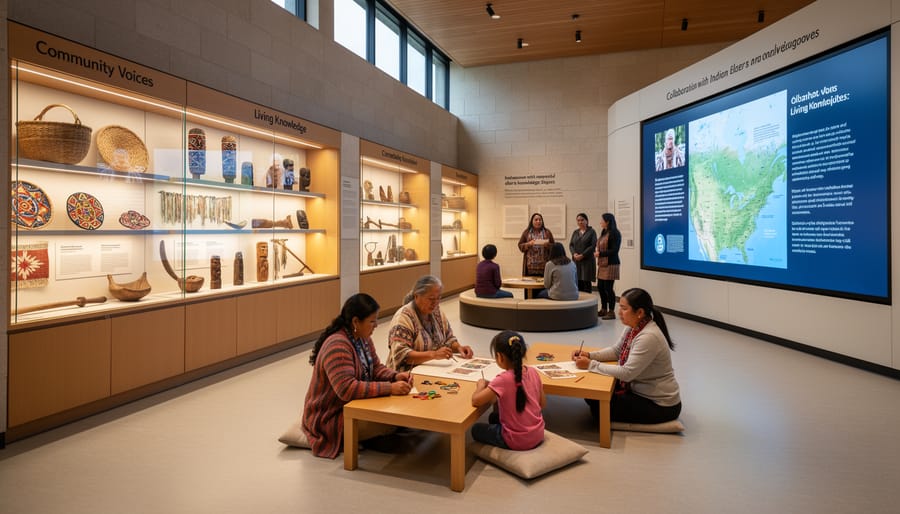
Canadian libraries, museums, and archives are fundamentally transforming how they present history and culture by centring Indigenous perspectives in their work. This shift moves beyond simply adding Indigenous content to existing exhibits, it requires reimagining institutional practices, governance structures, and the very concept of who holds authority over cultural knowledge.
Leading institutions now partner directly with Indigenous communities from project conception through completion. The Archives of Manitoba, for example, collaborates with Elders and knowledge keepers to provide cultural context for historical documents, ensuring that records are interpreted through Indigenous worldviews rather than solely colonial frameworks. These partnerships recognize that Indigenous peoples are not subjects of study but experts and authorities on their own histories.
Progressive museums have adopted a programming framework for Indigenous voices that shapes exhibition development, artifact stewardship, and public interpretation. This includes obtaining free, prior, and informed consent before displaying sacred objects, hiring Indigenous curators and interpreters, and creating spaces where oral histories hold equal weight to written documentation.
The Canadian Museum of History’s First Peoples Hall exemplifies this approach, designed in collaboration with Indigenous advisors, it presents diverse perspectives from across the country through community-selected artifacts, multimedia storytelling, and interpretive text written from Indigenous viewpoints. Visitors encounter history as Indigenous peoples themselves understand and relate it, not filtered through external academic analysis.
These institutional changes reflect growing recognition that meaningful reconciliation requires sharing interpretive authority and creating spaces where Indigenous Cultural Perspectives shape how all Canadians understand their shared past.
In Historical Understanding
Indigenous Cultural Perspectives fundamentally reshape how we understand Canadian history by centering voices and experiences long excluded from conventional narratives. Where traditional accounts often frame history from a colonial viewpoint, emphasizing European exploration, settlement, and nation-building, Indigenous perspectives reveal continuous occupation, sophisticated governance systems, and thriving cultures that predate contact by thousands of years.
These perspectives challenge the very structure of historical timelines. Indigenous knowledge doesn’t divide history into pre-contact and post-contact eras as settler narratives do. Instead, it presents an unbroken continuum of presence and relationship with the land. Events like treaties, for instance, aren’t merely historical documents but living agreements understood through oral histories that preserve context, promises, and responsibilities often absent from written records.
Indigenous perspectives also reframe what counts as historical evidence. Oral traditions, place names, and ceremonial practices carry knowledge about past events, environmental changes, and social relationships with precision that rivals archival documents. When museums and researchers incorporate these perspectives alongside written sources, a fuller picture emerges, one that acknowledges multiple truths, competing interests, and the complexity of Canada’s formation.
This integrated understanding moves beyond simplified narratives of discovery or progress to recognize both achievement and harm, continuity and change.
In Education and Public Engagement
Indigenous Cultural Perspectives are transforming how Canadians learn about their country’s history and present. Schools across the nation now integrate Indigenous knowledge into curricula, not as a separate topic, but woven through subjects from science to social studies. Students examine historical events through multiple lenses, comparing how different nations experienced colonization, treaties, and confederation.
Public programming has evolved beyond lecture-based presentations. Museums and heritage sites partner with Elders and knowledge keepers to offer land-based learning experiences, traditional craft workshops, and storytelling sessions that share perspectives directly from Indigenous communities. These programs allow participants to engage with living cultures rather than static artifacts.
Community education initiatives bring together Indigenous and non-Indigenous residents for dialogue and shared learning. Book clubs explore Indigenous authors, walking tours reveal place names and histories often overlooked, and collaborative projects document local Indigenous heritage. This grassroots engagement builds relationships and understanding that formal education alone cannot achieve.
The shift recognizes that understanding cultural perspectives requires active participation, not passive consumption. When learners engage directly with Indigenous teachers and communities, they develop respect grounded in genuine connection rather than abstract concepts.
Why Understanding Different Cultural Perspectives Matters
Understanding different cultural perspectives, especially Indigenous Cultural Perspectives, is essential for building an accurate, inclusive account of Canadian history and creating meaningful paths forward for all communities. When we acknowledge that history can be interpreted through multiple lenses, we move beyond incomplete or one-sided narratives toward a richer, more truthful understanding of the past and present.
Reconciliation requires this shift in perspective. The Truth and Reconciliation Commission’s Calls to Action specifically address the need for educational institutions, museums, and public bodies to integrate Indigenous histories and perspectives into their work. This isn’t simply about adding Indigenous content to existing frameworks, it means recognizing that Indigenous ways of knowing offer distinct, valid interpretations of events, relationships, and land that challenge conventional historical accounts. Without these perspectives, our understanding of Canada’s past remains fundamentally incomplete.
Accurate historical understanding depends on recognizing whose stories have been told and whose have been silenced. For generations, Canadian history was presented almost exclusively through a settler lens, marginalizing or erasing Indigenous experiences and knowledge systems. When we engage with Indigenous Cultural Perspectives, we encounter different interpretations of contact, treaty-making, residential schools, and contemporary land relationships. These perspectives often contradict official accounts, revealing truths that written records alone cannot capture.
Building shared futures requires this foundation of mutual understanding and respect. When educators teach history through multiple cultural perspectives, students develop critical thinking skills and cultural humility. When museums collaborate with Indigenous communities on interpretation, they create spaces where diverse visitors see themselves reflected and where cross-cultural dialogue becomes possible. When policymakers consider Indigenous perspectives on environmental management or heritage preservation, they access knowledge systems refined over millennia that offer practical solutions to contemporary challenges.
Engaging with different cultural perspectives is not a one-time learning exercise but an ongoing commitment to listening, questioning assumptions, and recognizing that our own worldview is one among many valid ways of understanding the world.
Common Questions About Cultural Perspectives
What’s the difference between a cultural perspective and a stereotype?
A cultural perspective is a dynamic, complex way of understanding the world shaped by lived experience, language, and teachings passed through generations, while a stereotype is a fixed, oversimplified assumption applied to all members of a group. Cultural perspectives acknowledge diversity within communities and evolve over time, whereas stereotypes ignore individual variation and freeze people in outdated or inaccurate characterizations.
Do all Indigenous peoples in Canada share the same cultural perspective?
No. First Nations, Métis, and Inuit peoples maintain distinct cultural perspectives shaped by their territories, languages, histories, and governance systems. Even within these groups, individual nations hold unique worldviews, for example, coastal Haida perspectives differ significantly from prairie Cree perspectives, reflecting diverse environments and experiences.
How can I learn about Indigenous cultural perspectives respectfully?
Start by engaging with resources created by Indigenous communities themselves, including books, exhibitions, and programs developed by cultural centres and museums. Attend public events where knowledge keepers share teachings, support Indigenous-led organizations, and approach learning with humility, recognizing that some knowledge is not meant to be shared publicly.
Do cultural perspectives change over time?
Yes. Cultural perspectives evolve as communities experience new circumstances, interact with other cultures, and adapt teachings to contemporary contexts while maintaining core values. Indigenous Cultural Perspectives today incorporate both traditional knowledge systems and lived experiences of colonization, resistance, and resurgence, creating perspectives that honour the past while addressing present realities.
How do I incorporate Indigenous perspectives in educational or research projects?
Begin by consulting with Indigenous communities whose perspectives you wish to include, following protocols for engagement and ensuring proper consent and attribution. Work collaboratively rather than extractively, invite Indigenous advisors or co-researchers to shape the project from the start, compensate knowledge holders fairly, and ensure the community benefits from the work.
Why do Indigenous perspectives sometimes conflict with written historical records?
Written records typically reflect the perspectives and biases of those who created them, often colonial administrators or settlers, while oral histories preserve Indigenous accounts of the same events from different vantage points. These differing perspectives reveal not competing facts but different ways of understanding what happened and what matters about the past.
These questions reflect common concerns people encounter when first engaging with Indigenous Cultural Perspectives in museums, classrooms, or community settings. Understanding that cultural perspectives are neither stereotypes nor monolithic viewpoints is fundamental to respectful engagement.
Many newcomers to this learning worry about making mistakes. That concern itself demonstrates good intent. The key is approaching Indigenous perspectives with genuine curiosity rather than assumptions, recognizing that your own cultural background shapes what seems natural or obvious to you. What feels like common sense in one cultural framework may not translate directly to another.
When you encounter an Indigenous perspective that challenges your existing understanding of Canadian history or current issues, that discomfort often signals an opportunity to expand your thinking. Rather than dismissing unfamiliar viewpoints or trying to reconcile them immediately with what you already believe, sit with the difference. Ask what you might learn by considering events or relationships through this lens.
Remember that incorporating Indigenous Cultural Perspectives into your work is not about checking a box or adding a paragraph acknowledging traditional territory. It requires ongoing relationship-building, deep listening, and willingness to share decision-making power with the communities whose knowledge you’re engaging.
how it works
Cultural perspectives work through a continuous process of learning, sharing, and interpreting the world around us. From birth, we absorb worldviews from family, community, and environment. Indigenous Cultural Perspectives operate through intergenerational knowledge transfer, where elders, knowledge keepers, and family members pass down teachings through lived experience, ceremony, and story.
Language shapes what we can perceive and express. Many Indigenous languages contain concepts without English equivalents, embedding specific relationships with land, time, and community directly into communication. When we encounter new information or experiences, our cultural lens filters and interprets them according to these learned frameworks.
Physical connection to land reinforces perspective. For Indigenous peoples across Canada, territories serve as living classrooms where seasonal cycles, animal behaviors, and plant knowledge teach essential truths. This relationship creates perspectives fundamentally different from viewing land as property or resource.
Cultural perspectives aren’t static. They evolve through experience while maintaining core values and teachings. Understanding this dynamic process helps explain why genuine cross-cultural learning requires sustained engagement, listening, and willingness to see through different eyes.
Understanding cultural perspectives transforms how we see Canadian history and our place within it. When we recognize that Indigenous Cultural Perspectives offer distinct ways of knowing grounded in thousands of years of relationship with this land, we move beyond a single narrative and embrace the complexity that makes Canada’s story whole.
This understanding matters practically. Museums become richer when they present multiple perspectives on artifacts and events. Historical sites take on new meaning when interpreted through the eyes of those whose ancestors lived these experiences. Environmental decisions improve when they incorporate knowledge systems that have sustained ecosystems for millennia.
The work of learning about cultural perspectives never truly ends. Indigenous worldviews aren’t static exhibits to study once and check off a list, they’re living knowledge systems that continue evolving through each generation. Every conversation with an Elder, every visit to a community-led cultural center, every thoughtfully curated exhibition deepens our understanding.
Canadian institutions like the Archives of Manitoba and regional museums across the country are actively building partnerships with Indigenous communities to share these perspectives authentically. These collaborations model the kind of respectful engagement that strengthens all our communities.
If you’re ready to continue this journey, start locally. Visit museums that work directly with Indigenous nations. Attend public talks by Indigenous historians and knowledge keepers. Explore how your region’s archives are incorporating diverse perspectives into their collections.
Lakes & Woods chronicles these stories across Canada, highlighting the voices and perspectives that shape our shared history. Subscribe to our newsletter to discover cultural sites, learn about Indigenous-led initiatives, and find resources that support deeper understanding of the many perspectives that make Canadian history meaningful.