
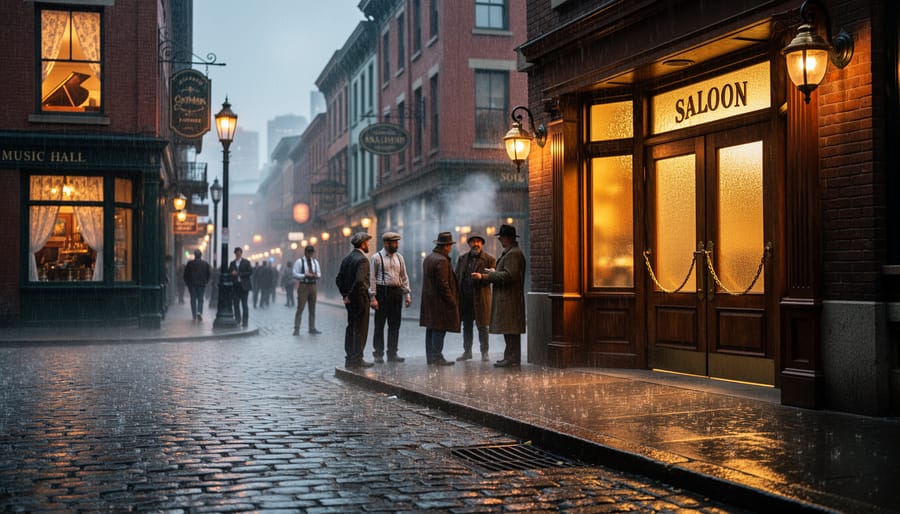
Vancouver’s after-dark culture traces a fascinating arc from frontier saloons to global entertainment destination, shaped by waves of immigration, evolving social attitudes, and the city’s unique geography. When the Canadian Pacific Railway reached Burrard Inlet in 1886, the settlement’s first drinking establishments served loggers and railway workers in rough-hewn taverns along Water Street, creating the foundation for what would become the historic Gastown district.
The early twentieth century brought strict liquor laws and moral reform movements that pushed nighttime entertainment underground. Prohibition-era Vancouver saw speakeasies flourish in Chinatown basements and False Creek warehouses, while dance halls in the West End attracted couples eager to embrace jazz-age freedom. By the 1950s, the city’s nightclub scene centered around elegant supper clubs on Granville Street, where touring performers shared stages with local musicians blending Indigenous, Asian, and European musical traditions.
The 1960s counterculture transformed Vancouver’s entertainment landscape entirely. Coffeehouses in Kitsilano became gathering spots for folk musicians and political activists, while the city’s first rock venues opened along East Hastings. This period established Vancouver as a creative hub that would attract international artists and define its reputation for musical innovation.
Understanding this historical evolution reveals how geography, migration patterns, and social movements created the diverse entertainment districts visible across Vancouver in 2026. Each neighborhood’s nighttime character reflects layers of cultural development stretching back 140 years, from Indigenous gathering traditions through railway-era expansion to contemporary multiculturalism.
Early Entertainment: Saloons, Music Halls, and Gastown’s First Gathering Places (1870s-1920s)
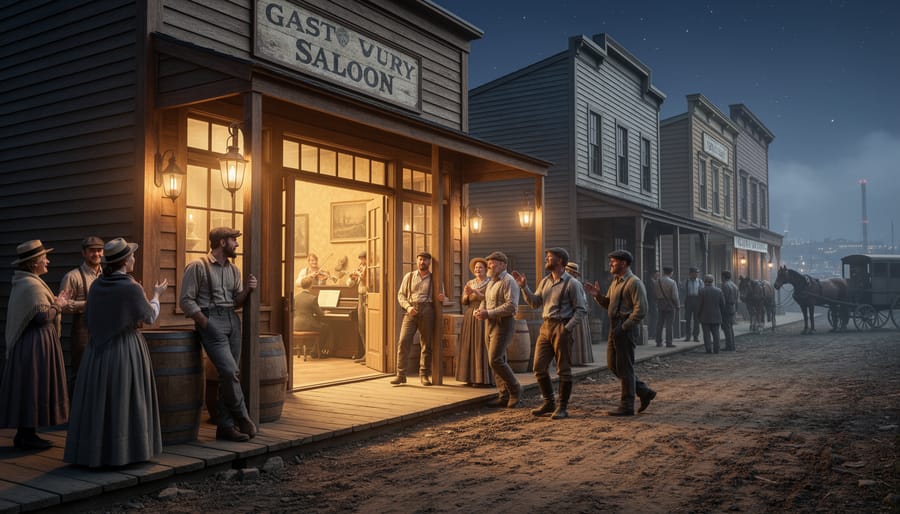
When Vancouver emerged as a rough-hewn settlement in the 1870s, entertainment followed close behind the sawmills and wharves. The city’s first social gathering places appeared along Water Street in what would become Gastown, where saloons served whisky to loggers, sailors, and railway workers who had few other outlets after grueling workdays. These establishments were hardly refined: wooden floors, basic furnishings, and a bar where men exchanged stories, wages, and occasionally punches. Yet they formed the backbone of early community life, serving as informal meeting halls, news exchanges, and the closest thing to cultural centers the frontier town possessed.
By the 1880s, as Vancouver incorporated and grew beyond its logging camp origins, entertainment venues became more varied and ambitious. The city’s first proper hotels, including the Sunnyside Hotel and the Deighton House, offered not just rooms but saloons, dining rooms, and spaces for traveling performers. Vaudeville acts began arriving by steamship and rail, performing in makeshift theaters and hotel ballrooms. These shows brought acrobats, singers, comedians, and dramatic sketches to audiences hungry for connection to the wider world. Archival records from the City of Vancouver Archives document how venues like the Vancouver Opera House, which opened in 1891, hosted everything from Shakespeare productions to boxing matches, reflecting the eclectic tastes of a young, working-class population.
The entertainment landscape mirrored the industries that sustained Vancouver. Loggers flush with payday cash packed saloons on Saturday nights. Maritime workers from the bustling harbor sought camaraderie in establishments along Alexander and Powell Streets. Musical entertainment often featured sea shanties, Irish folk songs, and piano ballads that resonated with immigrant workers from diverse backgrounds. By the early 1900s, Granville Street began developing its own theater district, with venues like the Imperial Theatre and Pantages Theatre bringing more sophisticated vaudeville and early motion pictures to growing middle-class audiences.
This era also saw the emergence of less documented but equally vital entertainment spaces in Chinatown and other ethnic enclaves, where communities maintained their own cultural traditions through music halls and social clubs. These early decades established patterns that would persist: Vancouver’s nightlife as a reflection of its working people, its maritime character, and its status as a meeting place for diverse populations seeking both escape and connection.
Prohibition and the Jazz Age: Underground Culture and Social Change (1920s-1940s)
When British Columbia enacted prohibition in 1917, Vancouver’s entertainment landscape didn’t disappear, it went underground. The city’s nightlife adapted with remarkable speed, transforming legitimate establishments into speakeasies and creating a thriving illicit culture that would define entertainment for the next two decades. Hotels maintained “dry” public dining rooms while discreetly serving alcohol in upstairs rooms, and enterprising operators opened basement clubs accessible only to those who knew the right knock or password.
Chinatown became a particular hub of after-hours activity during this era. The neighborhood’s complex architecture, with its interconnected buildings, basement tunnels, and multiple exits, provided ideal conditions for clandestine entertainment venues. Jazz music, brought north by African American musicians escaping racial segregation in the United States, found enthusiastic audiences in these underground clubs. Chinese, Japanese, and European immigrants mingled in spaces where mainstream Vancouver society rarely ventured, creating a genuinely multicultural nightlife scene decades before such mixing became socially acceptable elsewhere in the city.
Granville Street developed its own character during these years, with dance halls operating in legal grey areas and hotels testing the boundaries of liquor regulations. The Commodore Ballroom, which opened in 1929 just as prohibition ended in British Columbia, represented the transition from underground culture to legitimate entertainment. Its famous “floating” dance floor was designed specifically for the energetic jazz dancing that had flourished in illegal venues throughout the previous decade.
The end of prohibition in 1921 didn’t immediately legitimize all nightlife, however. Restrictive licensing, early closing hours, and social stigma around public drinking meant that many entertainment venues continued to operate with one foot in respectability and another in creative rule-bending. This tension between official regulation and actual practice would shape Vancouver’s nightlife culture for generations, establishing patterns of entrepreneurial adaptation that remain visible in the city’s entertainment landscape today.
Post-War Boom: The Rise of Nightclubs and Hotel Lounges (1950s-1970s)
The end of the Second World War ushered in unprecedented prosperity for Vancouver, and the city’s nightlife scene exploded to meet the demands of a population eager to celebrate peace and economic growth. Wartime restrictions on entertainment venues lifted, and entrepreneurs rushed to establish legitimate establishments that transformed how Vancouverites spent their evenings.
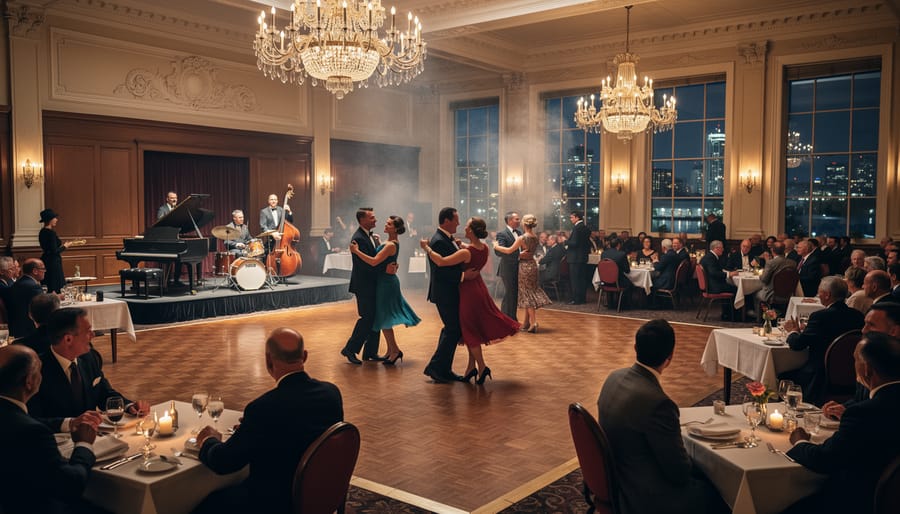
The Hotel Vancouver, which had served as a military headquarters during the war, reclaimed its status as the city’s premier social destination. Its ballrooms hosted glamorous events featuring big band orchestras, while smaller hotel lounges across downtown became fixtures of middle-class social life. The Panorama Roof at the Hotel Vancouver offered dancing with sweeping city views, attracting well-dressed patrons willing to pay premium prices for sophistication. Similar venues emerged at the Georgia Hotel and the Sylvia Hotel, each cultivating distinct atmospheres that appealed to different segments of Vancouver’s growing population.
Granville Street cemented its reputation as the entertainment district during this era, with nightclubs lining the thoroughfare from Davie to Hastings. The Cave Supper Club, which operated from 1937 until 1981, reached its cultural peak in the 1950s and 1960s, bringing internationally renowned performers to Vancouver stages. Patrons dressed formally to see acts that ranged from Ella Fitzgerald to Sammy Davis Jr., making the venue a point of pride for a city still establishing its cultural credentials. Nearby, Isy’s Supper Club and the Palomar Supper Club competed for audiences with elaborate floor shows combining dining, dancing, and live entertainment.
This period reflected broader social changes reshaping Canadian cities. Increased automobile ownership meant Vancouverites could easily travel downtown for evenings out, while rising incomes made regular entertainment expenditures affordable for working families. Women gained greater social freedom to frequent nightlife venues without male escorts, though many establishments maintained dress codes and conduct expectations that reflected conservative values. The proliferation of nightclubs also created employment opportunities for musicians, servers, and performers, contributing to Vancouver’s developing entertainment economy that would continue evolving through subsequent decades.
The Cultural Renaissance: Diverse Venues Reflect Multicultural Vancouver (1980s-2000s)
Vancouver’s nightlife underwent a profound transformation between the 1980s and early 2000s, shaped by unprecedented immigration that fundamentally altered the city’s cultural landscape. Expo 86 served as a catalyst, attracting international attention and investment that coincided with significant policy shifts, including changes to immigration laws that brought waves of newcomers from Hong Kong, Taiwan, South Asia, and Latin America. These communities didn’t simply patronize existing venues; they created entirely new entertainment ecosystems that reflected their traditions and tastes.
South Asian clubs emerged along Main Street and in Surrey, featuring live bhangra performances and Bollywood nights that introduced broader Vancouver to these vibrant musical traditions. Similarly, Latin dance venues opened in Mount Pleasant and Commercial Drive, where salsa, merengue, and bachata nights drew both immigrant communities and curious locals. The Commodore Ballroom, already a historic venue, adapted its programming to include world music acts, demonstrating how even established institutions recognized Vancouver’s changing demographics.
The era’s cultural ferment extended beyond immigrant communities. Vancouver’s punk and alternative music scene exploded during the 1980s, with venues like the Smiling Buddha Cabaret and the Town Pump becoming legendary for showcasing local bands and touring acts from the Pacific Northwest corridor. These grimy, authentic spaces contrasted sharply with the polished hotel lounges of previous decades, reflecting youth culture’s rejection of mainstream conventions. The alternative scene helped establish Vancouver’s reputation as a music city, producing artists who gained national and international recognition.
Several historic venues defined this transformative period:
- The Railway Club (1931 building, club established 1980s – Hosted hundreds of indie and folk acts in an intimate second-floor setting
- Richards on Richards (1984-2016) – Combined live music with dance club culture, booking international headliners
- Graceland (1986-2014) – Known for live punk, rock, and alternative performances in a basement space
- Yuk Yuk’s Comedy Club (1978) – Brought stand-up comedy to Vancouver, launching numerous Canadian comedians’ careers
- The Mesa Luna (late 1980s-1990s) – Pioneered Latin dance culture in the city
Yaletown’s transformation from industrial wasteland to entertainment district exemplified the period’s urban renewal philosophy. Following Expo 86, developers converted warehouses into loft residences, restaurants, and lounges that attracted young professionals. This gentrification pattern, while controversial, created a new nightlife geography that shifted some activity away from Granville Street’s traditional corridor.
Policy changes significantly impacted venue operations during this period. The provincial government gradually relaxed liquor regulations, eliminating some restrictions on entertainment licensing and allowing venues greater flexibility in programming. Sunday entertainment laws eased, extended hours became more common, and the distinction between different license types blurred, creating opportunities for hybrid spaces that combined dining, drinking, and live entertainment. These regulatory shifts reflected changing attitudes toward nightlife as a legitimate cultural and economic activity rather than a vice requiring strict control.
Modern Evolution: Technology, Tourism, and Cultural Preservation (2010s-2026)
The digital revolution fundamentally reshaped how Vancouverites discover and experience nightlife. By the early 2010s, social media platforms replaced word-of-mouth and newspaper listings as the primary way residents learned about events and venues. Entertainment districts that once relied on foot traffic now competed in Instagram feeds and Facebook events. This shift democratized nightlife promotion, allowing smaller venues and independent promoters to reach audiences previously dominated by establishments with large advertising budgets. The rise of ride-sharing services after 2015 also altered patterns, making previously isolated neighborhoods like Mount Pleasant and Commercial Drive more accessible for late-night outings.
Tourism became increasingly central to Vancouver’s nightlife economy during this period. The city’s 2010 Winter Olympics spotlight brought international attention that persisted through the decade. Downtown entertainment districts adapted their offerings to accommodate both local residents and visitors seeking authentic Vancouver experiences. Heritage venues capitalized on their history, marketing themselves as destinations where tourists could experience authentic West Coast culture rather than generic nightclub atmospheres.
The COVID-19 pandemic beginning in 2020 devastated Vancouver’s nightlife industry. Government-mandated closures eliminated revenue for months, and when venues reopened, capacity restrictions and vaccine mandates dramatically altered operations. Many historic establishments permanently closed, including several venues that had operated for decades. The Commodore Ballroom, which survived prohibition and economic downturns since 1929, faced its greatest existential challenge. Community fundraising efforts and government support programs helped preserve some landmark venues, but the landscape contracted significantly.
Recovery brought unexpected innovations. Hybrid events combining in-person and virtual elements emerged from necessity but revealed new possibilities for accessibility and reach. Outdoor entertainment spaces proliferated, with patios and street festivals expanding beyond traditional summer months. Venues invested in improved ventilation systems and flexible layouts that could adapt to changing health guidelines or future disruptions.
Cultural preservation efforts gained urgency as closures threatened irreplaceable historical venues. The Vancouver Heritage Foundation and local advocacy groups worked to secure heritage designation for architecturally significant entertainment buildings. The Rickshaw Theatre, housed in a 1908 building, received heritage status protecting it from demolition. Policy discussions about balancing development pressures with cultural preservation intensified, recognizing that nightlife venues represent living history where present-day Vancouverites engage with spaces their grandparents frequented. These establishments connect contemporary entertainment culture to traditions stretching back through Vancouver’s transformation from frontier town to cosmopolitan city.
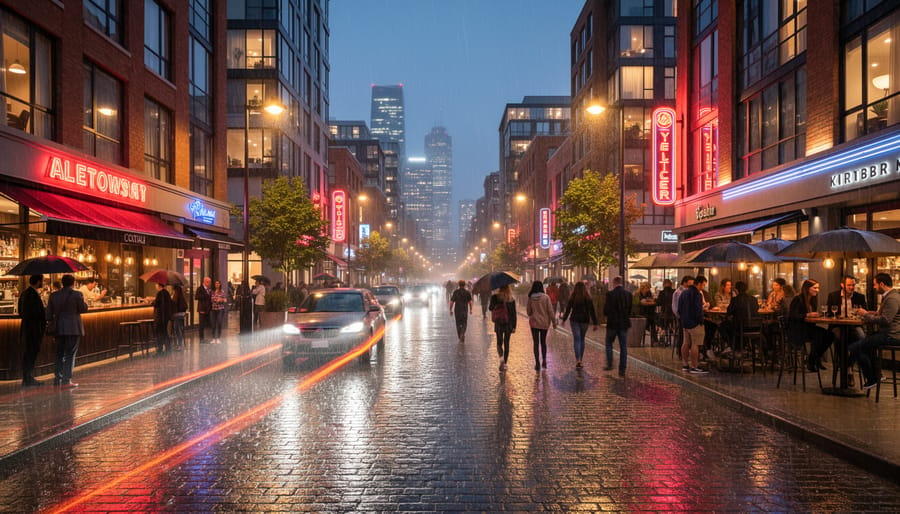
Visiting Vancouver’s Historic Nightlife Landmarks Today
Walking through Vancouver today, history enthusiasts can still trace the city’s entertainment evolution through carefully preserved landmarks and immersive experiences. The Gastown district remains the most concentrated area for experiencing Vancouver’s nightlife heritage, where original building facades from the 1880s now house modern establishments with historical interpretation plaques.
Several institutions offer dedicated programming for those interested in entertainment history. The City of Vancouver Archives maintains extensive collections of photographs, liquor license records, and architectural drawings from historic venues, available for public viewing by appointment. The Museum of Vancouver regularly features exhibits exploring nightlife culture, including displays of vintage neon signs salvaged from demolished Granville Street establishments and artifacts from shuttered jazz clubs.
For hands-on exploration, multiple walking tour operators offer themed routes through historical entertainment districts. Lost Souls of Gastown provides evening tours focusing on prohibition-era speakeasies and early saloon culture. The Vancouver Heritage Foundation coordinates quarterly architectural walks highlighting significant entertainment buildings, many designed by notable Canadian architects during the 1920s boom period.
| Historic Site | Location | Historical Significance |
|---|---|---|
| The Yale Hotel | 1300 Granville Street | Operating blues venue since 1889, hosted early jazz performances |
| Commodore Ballroom | 868 Granville Street | 1929 dance hall with original sprung floor, preserved Art Deco interior |
| Chinatown Millennium Gate | Pender Street entrance | Marks historic district with 1920s-1940s jazz and dance hall heritage |
| Penthouse Nightclub site | 1019 Seymour Street | Former infamous cabaret (1947-2007), now commemorated with historical marker |
The BC Entertainment Hall of Fame, while currently operating virtually due to venue transitions, maintains comprehensive online exhibits documenting performers, venues, and cultural movements that shaped Vancouver’s entertainment landscape. Their digital collections include oral histories from musicians, bartenders, and venue owners who witnessed the nightlife transformations firsthand.
Several historic venues continue operating in their original capacities. The Commodore Ballroom, built in 1929, maintains its sprung dance floor and hosts concerts where visitors can experience the same architectural acoustics that entertained depression-era crowds. The Yale Hotel on Granville Street has continuously served live music since 1889, making it the city’s longest-operating entertainment venue.
Vancouver’s nightlife venues tell stories that extend far beyond entertainment. These gathering places, from Gastown’s earliest saloons to contemporary cultural spaces, have consistently mirrored the city’s transformation through waves of immigration, economic shifts, and evolving social values. The dance halls where wartime workers found brief respite, the jazz clubs where diverse communities created new musical traditions, and the underground spaces where people challenged restrictive laws all represent chapters in Canada’s broader narrative of cultural development.
Understanding nightlife as historical artifact reveals how ordinary people experienced pivotal moments in Canadian history. Entertainment venues weren’t merely backdrops; they were where communities formed, cultural boundaries dissolved, and social movements gained momentum. The evolution from exclusionary establishments to inclusive cultural hubs reflects Canada’s journey toward recognizing its multicultural identity.
We invite you to explore this dimension of Canadian heritage further. Subscribe to the Lakes & Woods newsletter to receive stories about historic entertainment districts, profiles of venues that shaped cultural movements, and updates on preservation efforts across Canada. Share your own memories or family stories of Vancouver’s nightlife history, these personal narratives enrich our collective understanding of how Canadians lived, celebrated, and built community.
By examining where Vancouverites gathered after dark, we discover truths about who we were and continue to become as a nation. Every preserved theater, documented speakeasy, and commemorated music hall represents threads in the larger tapestry of Canadian cultural history worth celebrating and protecting.