
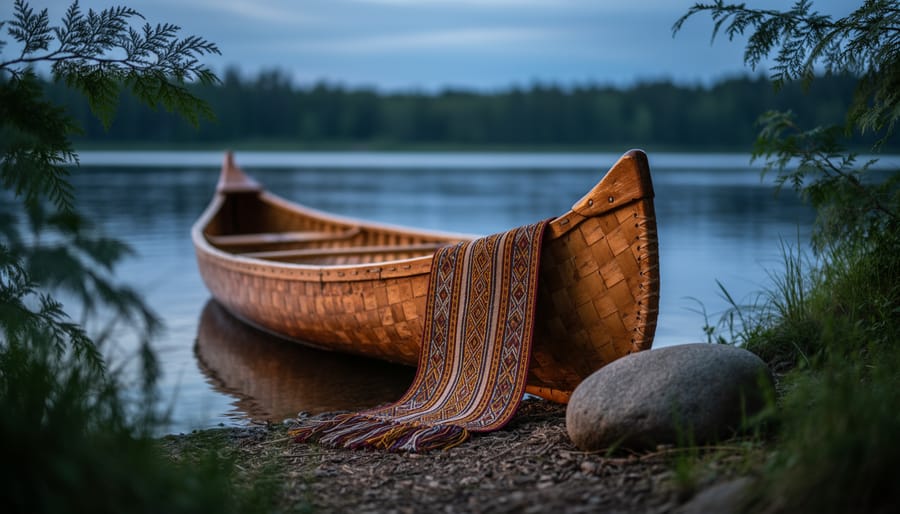
An indigenous perspective sees the world through interconnected relationships between people, land, spirit, and time rather than through the compartmentalized frameworks common in Western thought. This worldview, rooted in thousands of years of lived experience across territories now known as Canada, offers profound insights into sustainability, community responsibility, and knowledge transmission that educational institutions and museums increasingly recognize as vital for understanding our shared past and future.
Indigenous ways of knowing emphasize reciprocal relationships rather than hierarchical ownership, oral storytelling alongside written records, and seasonal cycles that shape cultural practices. Where Western academic traditions often separate science from spirituality or history from environment, indigenous perspectives treat these dimensions as fundamentally connected. A story about salmon migration, for instance, carries ecological knowledge, seasonal timing, spiritual teachings, and historical memory all at once.
Understanding this perspective matters deeply for contemporary Canada. Museums reimagining their collections, educators developing curriculum, and communities seeking reconciliation all benefit from grasping how indigenous nations have organized knowledge, governed territories, and maintained cultural continuity despite colonial disruption. The Anishinaabe concept of “all my relations” or the Cree principle of wahkohtowin (kinship) offer frameworks for environmental stewardship and social responsibility that resonate far beyond indigenous communities.
Yet indigenous perspectives are not monolithic. The maritime worldview of the Mi’kmaq differs from the plains cosmology of the Blackfoot, just as Inuit understanding of Arctic ecosystems reflects distinct environmental relationships from those of Pacific Northwest nations. Regional diversity enriches rather than dilutes the core recognition that land, language, and lineage form the foundation of indigenous knowledge systems that continue to evolve and thrive across this country.
Core Elements of Indigenous Perspectives
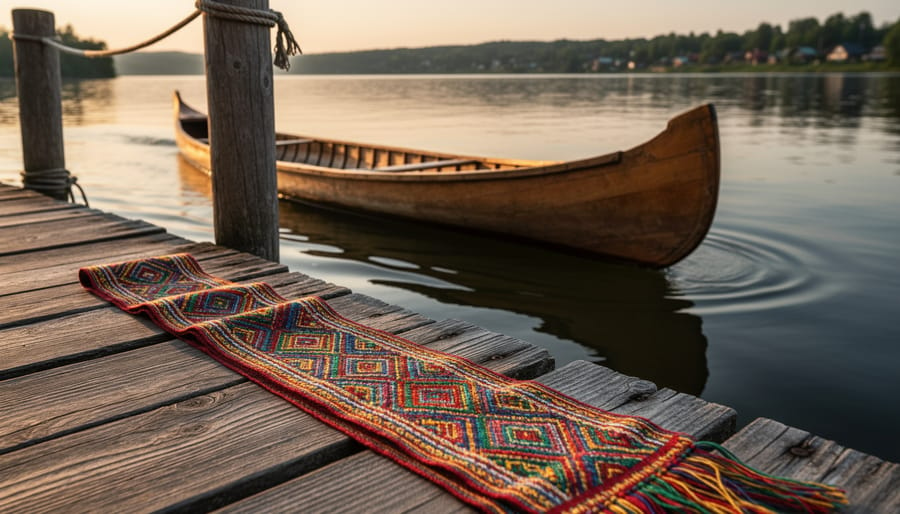
Relational Worldviews and Interconnectedness
Indigenous worldviews rest on a foundational principle: everything is connected. Rather than seeing humans as separate from or superior to the natural world, First Nations, Métis, and Inuit peoples understand existence through relationships. Land, water, plants, animals, ancestors, and spiritual beings form an interconnected web where each element depends on and influences the others.
This relational thinking shapes how Indigenous peoples interact with their environment. A lake is not simply a resource to be used, but a living entity with its own spirit and role in the ecosystem. Harvesting wild rice or hunting caribou involves protocols that honor these relationships, recognizing that taking from the land creates responsibilities to give back and maintain balance. These cultural perspectives contrast sharply with Western frameworks that often categorize the world into separate, hierarchical domains.
The concept extends beyond the physical world. Many Indigenous nations understand that spiritual realms, dream worlds, and the experiences of ancestors remain actively present, shaping current realities. Decisions consider impacts on future generations, reflecting a temporal interconnectedness that Western linear thinking often misses. This holistic approach means that actions in one area ripple through the entire system, whether ecological, social, or spiritual, requiring thoughtful attention to maintaining harmony across all relationships.
Oral Traditions as Knowledge Systems
Oral traditions represent sophisticated knowledge systems that encode millennia of observation, cultural values, and practical wisdom. Unlike written records that fix information in time, storytelling allows knowledge to remain living and adaptive, each generation learns not just facts but context, relationships, and appropriate application. An Elder sharing a teaching story about seasonal changes doesn’t simply list dates; the narrative carries observations about animal behaviour, plant cycles, weather patterns, and the interrelationships that inform decisions about harvesting, travel, and ceremony.
Storytelling serves multiple functions simultaneously. A single narrative might contain ecological knowledge about medicinal plants, moral guidance about community responsibilities, and historical memory of territorial boundaries. The oral transmission requires listeners to engage actively, asking questions and relating teachings to their own experiences. This process builds critical thinking rather than passive memorization.
Ceremony creates structured contexts for transmitting specialized knowledge. Protocols around sacred practices ensure information passes only to those ready to receive and properly use it. This careful stewardship protects both the knowledge itself and the community from misuse. The spoken word, accompanied by song, drum, and ritual action, engages memory through multiple sensory pathways that written text cannot replicate.
Western institutions increasingly recognize oral traditions as rigorous historical sources rather than mere folklore. Courts have accepted oral testimonies about territorial use spanning generations, acknowledging that knowledge transmitted through careful training and repetition can be as reliable as documentary evidence, sometimes more so, since storytellers actively maintain accuracy through communal verification rather than leaving records to gather dust unquestioned.
Time, Place, and Cyclical Understanding
Indigenous perspectives fundamentally challenge Western linear conceptions of time that position events along a past-present-future timeline. Instead, many Indigenous worldviews understand time as cyclical, where past, present, and future coexist and inform one another continuously. This cyclical understanding recognizes that teachings from ancestors remain relevant today, that decisions made now affect seven generations forward, and that seasonal patterns and natural cycles provide the framework for organizing knowledge and community life.
The concept of “all my relations” extends temporally as well as spatially. Elders often speak of being in conversation with those who came before and those yet to come, a simultaneity that contrasts sharply with compartmentalized historical thinking. Ceremonies mark not just anniversaries of past events but active renewals of relationships and responsibilities that transcend linear time. Winter storytelling traditions, for instance, connect listeners simultaneously to creation narratives, historical events, and contemporary teachings without strict chronological separation.
Place-based knowledge forms the anchor for this temporal understanding. Indigenous perspectives root abstract concepts in specific landscapes, watersheds, and territories where knowledge has accumulated over millennia. A particular fishing site holds not just historical memory but active instruction for sustainable harvesting, embedded in stories that blend what outsiders might categorize separately as myth, history, and environmental science. Traditional ecological knowledge demonstrates how this place-based, cyclical understanding generates sophisticated, adaptive systems for reading seasonal indicators, managing resources, and maintaining balance with natural cycles.
This integration of time and place means that Indigenous historical understanding resists extraction from territory. Knowledge keepers often describe teachings as living within the land itself, accessible through presence, observation, and relationship rather than through detached study. The landscape becomes a text written across generations, where rock formations, river bends, and plant communities carry layered meanings that inform both land stewardship practices and cultural identity.
For museums and educators, engaging with these cyclical, place-based perspectives means recognizing that Indigenous cultural heritage cannot be frozen in historical amber but continues evolving through ongoing relationships with territory and tradition.
Indigenous Perspectives Across Canada’s Diverse Nations
First Nations Perspectives from Coast to Coast

The traditional territories across Canada’s vast geography have shaped profoundly different worldviews among First Nations peoples, with each region’s landscapes, resources, and seasonal patterns informing distinct perspectives on relationship, responsibility, and knowledge.
Pacific Coast nations developed perspectives deeply rooted in abundance and potlatch economies. The Haida, Salish, and Kwakwaka’wakw peoples viewed the ocean and forest as interconnected systems of gifts that required reciprocal responsibilities. Cedar trees were understood not as resources but as relatives providing shelter, clothing, and spiritual protection. Salmon runs weren’t simply food sources but sacred cycles connecting underwater, terrestrial, and human realms through seasonal ceremonies and harvest protocols that ensured balance across generations.
Prairie communities like the Blackfoot, Cree, and Dakota nations developed perspectives shaped by vast horizons and buffalo herds that required sophisticated understanding of migration, weather patterns, and respectful hunting practices. These perspectives emphasized movement across territories, reading subtle environmental signs, and maintaining relationships with animal nations through ceremony and stewardship. The concept of treaty rights emerged from these relational frameworks, understood as ongoing agreements between nations rather than one-time land transfers.
Eastern Woodlands peoples including the Anishinaabe, Haudenosaunee, and Mi’kmaq developed perspectives rooted in forest ecosystems, seasonal harvesting cycles, and complex governance structures. The Haudenosaunee Great Law of Peace, for instance, required decisions to consider impacts seven generations forward, reflecting a temporal perspective vastly different from Western planning horizons. Understanding indigenous languages remains essential for accessing these worldviews, as concepts like “Aki” (the living earth) carry meanings untranslatable in English.
Northern Dené, Innu, and Cree nations shaped perspectives around subarctic survival, reading ice conditions, understanding caribou behavior, and navigating darkness and light extremes. Their knowledge systems include sophisticated astronomical observations, weather prediction methods, and symbolic systems that encode environmental information across generations through stories, songs, and material culture.
Métis and Inuit Worldviews
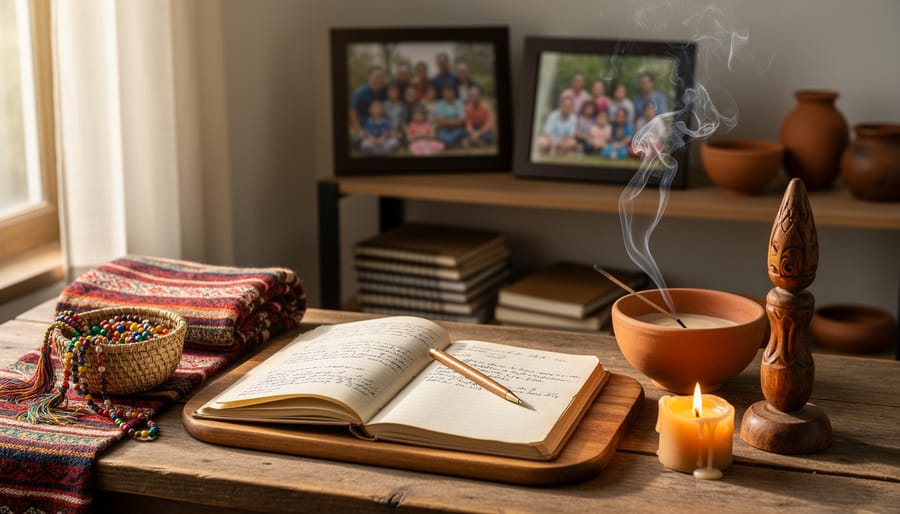
Métis worldviews emerged from the meeting of Indigenous and European cultures, creating a distinct perspective grounded in adaptability, kinship networks, and the Métis homeland spanning the Prairies and the northern Great Lakes. Rather than occupying a middle ground between cultures, Métis perspectives reflect a unique synthesis, a way of understanding that honours both ancestral Indigenous knowledge and the innovations born from cultural confluence. Central to Métis identity is the concept of otipemisiwak (the people who own themselves), emphasizing self-determination and resistance to external categorization. Métis perspectives value resourcefulness, community solidarity through institutions like the Métis Nation, and oral histories that trace family connections across vast trading networks. The land informs Métis worldviews not through permanent territorial occupation but through seasonal movement patterns, buffalo hunts, and river systems that connected communities from Red River to the Saskatchewan basin.
Inuit perspectives arise from life in the Arctic, where survival depends on intimate knowledge of sea ice, animal behaviour, and weather patterns that shift with dramatic seasonal variation. The principle of *Inuit Qaujimajatuqangit*, Inuit traditional knowledge, encompasses practical skills like reading ice conditions and navigating by stars, alongside social values including respect for elders, resourcefulness, and sharing within tight-knit communities. Inuit worldviews emphasize observation and patience, recognizing that understanding the land requires generations of accumulated experience. Time unfolds differently in the Arctic: the returning sun after months of darkness, the ice forming and breaking, the caribou migrations all structure Inuit understanding of cycles and continuity. Stories carry knowledge about safe travel routes, productive hunting grounds, and relationships with the animal spirits who sustain human life. For Inuit communities, perspective is inseparable from place, knowledge tied to specific bays, islands, and hunting territories that Western maps often fail to capture with sufficient nuance.
Both Métis and Inuit worldviews demonstrate how distinct histories, environments, and social structures produce perspectives that cannot be homogenized under a single “indigenous” label.
Applying Indigenous Perspectives in Museums and Education
Collaborative Approaches with Indigenous Communities
Meaningful collaboration begins with recognizing Indigenous communities as knowledge authorities, not merely consultants. Museums and cultural institutions across Canada now work directly with Elders, knowledge keepers, and regional tribal councils to shape how history is told, displayed, and preserved. These partnerships operate on principles of shared authority, where Indigenous voices guide everything from exhibit development to artifact interpretation, fundamentally shifting whose perspective defines Canadian cultural identity in public spaces.
Effective collaboration requires sustained relationships built over years, not short-term project consultations. Lakes & Woods Museum maintains ongoing partnerships with local First Nations communities and Métis organizations, involving cultural advisors from the earliest planning stages rather than seeking approval after decisions are made. This approach ensures that Indigenous perspectives shape the questions asked, the materials selected, and the contexts provided. When developing exhibitions about treaty history or traditional land use, for example, community members participate in research, contribute oral histories, and determine appropriate ways to present sacred knowledge.
Regional tribal councils and Indigenous cultural centres serve as essential partners in these efforts, connecting museums with knowledge holders and establishing protocols that respect cultural sensitivities. These relationships also enable institutions to understand the broader context of their collections, linking artifacts to living cultural practices rather than treating them as historical curiosities. The collaborative model influences how museums approach cultural hub history across Canada, acknowledging that Indigenous communities have always been central to shaping cultural landscapes, not peripheral to them.
Repatriation and Cultural Protocols
Indigenous perspectives fundamentally challenge the museum-as-owner model that once dominated Canadian institutions. When cultural items were historically collected without consent or context, they were often treated as artifacts to be studied and displayed at will. Indigenous worldviews, however, recognize these objects as living entities with ongoing relationships to communities, families, and territories. Sacred items carry responsibilities that don’t transfer with physical possession. This understanding now guides repatriation processes, where museums work with Indigenous nations to return ceremonial objects, ancestral remains, and culturally significant materials to their rightful communities.
Repatriation isn’t simply about transferring ownership. It requires museums to listen deeply to Indigenous knowledge about which items should never have left their communities, who holds authority to speak for them, and what protocols govern their handling. Some objects require specific gender restrictions, seasonal considerations, or ceremonial preparation before they can be touched. Museums increasingly recognize that Indigenous peoples are the experts on their own cultural materials, not outside scholars or curators.
Cultural protocols shaped by indigenous perspectives also transform how museums display and interpret items that remain in collections. This means consulting with Indigenous communities about appropriate contexts, acknowledging when certain items shouldn’t be photographed or publicly exhibited, and understanding that some knowledge is restricted to specific community members. A ceremonial mask might require covering during certain times of year. A medicine bundle might need to be positioned in a particular direction.
These protocols extend beyond sacred objects. Indigenous perspectives inform decisions about language use, photographic reproduction of elders who have passed, and even the physical orientation of display cases. Museums committed to authentic Indigenous culture representation now understand that respectful stewardship means accepting Indigenous authority over cultural heritage, even when it complicates traditional museum practices.
Why Indigenous Perspectives Matter for Understanding Canadian History
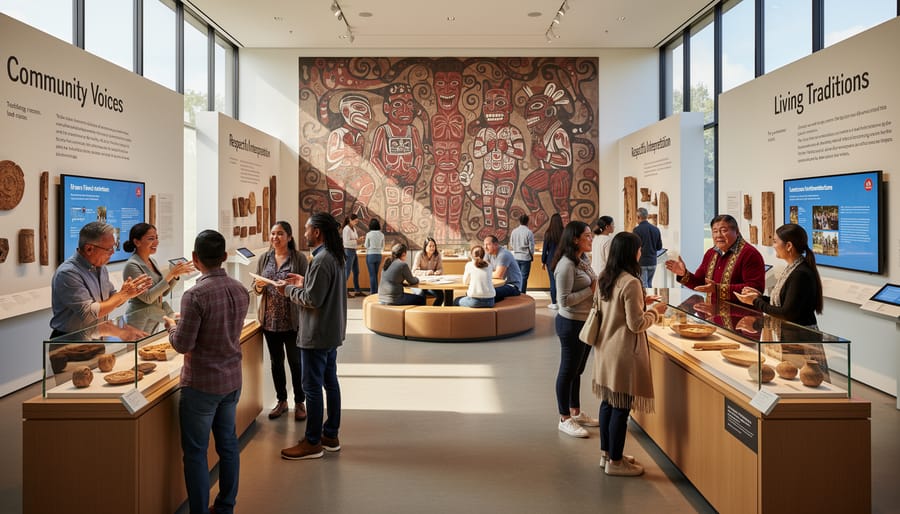
Centering indigenous perspectives fundamentally reshapes how we understand Canadian history. Rather than viewing the past through a colonial lens that positions 1867 or European contact as “the beginning,” indigenous perspectives reveal thousands of years of continuous presence, sophisticated governance systems, and deep knowledge of these lands. This shift moves Canadian history from a narrative of discovery and settlement to one that recognizes Indigenous peoples as the original historians, scientists, and stewards of this territory.
When museums and educators integrate these ways of knowing they challenge the incomplete stories many Canadians learned in school. Colonial narratives often portrayed Indigenous peoples in past tense, erasing their ongoing contributions to art, law, environmental stewardship, and cultural innovation. Indigenous perspectives reveal how treaties were nation-to-nation agreements rather than simple land transactions, how traditional ecological knowledge offers solutions to contemporary environmental challenges, and how oral histories preserve detailed accounts that written records missed or distorted.
This transformation matters because it affects present-day relationships and policy. Understanding treaty history from Indigenous perspectives clarifies ongoing rights and responsibilities that shape everything from resource development to education systems. Recognizing the sophistication of pre-contact societies counters persistent stereotypes and acknowledges the resilience required to maintain cultures despite residential schools, the Sixties Scoop, and other assimilationist policies.
For the next generation of historians, archaeologists, and museum professionals, indigenous perspectives provide essential methodologies. They demonstrate how knowledge lives in ceremony, language, and relationship to place, not just in written documents. They show that historical truth requires multiple viewpoints, particularly from those whose experiences were systematically excluded from official records.
At Lakes & Woods Museum, this commitment shapes how we curate exhibits, select artifacts for display, and frame interpretive materials. Working alongside Indigenous knowledge holders ensures that visitors encounter fuller, more accurate narratives that honor both the painful chapters of Canadian history and the remarkable strength of Indigenous communities who continue to shape this country’s cultural landscape. These perspectives aren’t alternative viewpoints to be added as afterthoughts; they’re foundational to understanding the full scope of Canadian history.
Common Questions About Indigenous Perspectives
What’s the difference between indigenous knowledge and Western science?
Indigenous knowledge systems are holistic, relationship-based, and often passed down through oral traditions and experiential learning over thousands of years, while Western science typically emphasizes empirical observation, written documentation, and compartmentalized study. Rather than competing frameworks, many scholars and practitioners now recognize these as complementary ways of understanding the world, each offering valuable insights for challenges like environmental stewardship and climate adaptation.
How can non-Indigenous people learn about these perspectives respectfully?
Start by listening to Indigenous voices directly through books, documentaries, and public talks by Indigenous authors and knowledge holders rather than relying solely on interpretations by non-Indigenous sources. When visiting cultural sites or museums, follow any protocols shared by staff, ask permission before photographing ceremonial items, and recognize that some knowledge is meant to remain within specific communities rather than being shared publicly.
Why are there different terms like Aboriginal, Indigenous, and First Nations?
Language has evolved to reflect self-determination and accuracy: “Aboriginal” was a legal term in Canada’s Constitution but many communities now prefer “Indigenous” as a global identifier, while “First Nations,” “Métis,” and “Inuit” acknowledge distinct peoples with different histories, cultures, and rights. When possible, use the specific nation name (like Anishinaabe, Cree, or Haida) rather than broad umbrella terms, and recognize that preferences vary between communities and individuals.
How do indigenous perspectives influence modern Canadian policy?
The duty to consult with Indigenous communities, established through court decisions, now shapes resource development, environmental assessments, and land use planning across Canada. Indigenous perspectives on sustainability, collective decision-making, and consideration for future generations have influenced policies ranging from climate action to child welfare reform, though implementation remains uneven and contested.
These questions reflect common curiosities among museum visitors and students exploring Canadian history through more complete lenses. Educators working with school groups often ask about incorporating indigenous perspectives without appropriation, which requires clear boundaries: teach about publicly shared aspects of culture while respecting that ceremonies, sacred stories, and certain traditional knowledge belong to specific communities and should not be extracted or performed by outsiders.
Another frequent concern involves reconciling conflicting historical accounts. Indigenous oral histories sometimes describe events differently than colonial written records, not because one is incorrect but because they emerge from different standpoints, values, and purposes. A battle that colonial documents frame as conquest might be remembered in oral tradition as a defense of ancestral territory and relationships, revealing how perspective fundamentally shapes what gets recorded and how meaning is made from the past.
Students also wonder whether indigenous perspectives are static or changing. Contemporary Indigenous peoples balance traditional knowledge with modern contexts, adapting ancestral principles to address new challenges while maintaining cultural continuity. A young Inuit person studying climate science brings both Western training and generations of observations about ice, weather, and animal behavior, demonstrating how indigenous perspectives remain dynamic and relevant rather than frozen in pre-contact time.
Indigenous perspectives remain vibrant, dynamic forces in Canadian life today. These worldviews continue to evolve through the lived experiences of First Nations, Métis, and Inuit communities, adapting to contemporary challenges while maintaining their foundational principles of relationship, reciprocity, and respect. Far from being frozen in history, these perspectives actively shape environmental policy, legal frameworks, artistic expression, and educational practice across the country.
Understanding indigenous perspectives transforms how we interpret Canada’s past and envision its future. When museums, schools, and cultural institutions center these worldviews, they create space for more complete, honest narratives that recognize Indigenous peoples as active participants in every chapter of Canadian history, not just subjects of colonial accounts.
The journey toward deeper understanding requires ongoing engagement. Lakes & Woods Museum welcomes visitors to explore exhibits that showcase Indigenous cultural perspectives through collaborative storytelling. Our partnerships with institutions like the Archives of Manitoba and guidance from Indigenous knowledge holders ensure authentic, respectful representation. Sign up for our newsletter to receive updates on new programming, special events, and opportunities to connect with Indigenous voices. Visit historical sites where these perspectives are honored, attend cultural events led by Indigenous communities, and continue learning from the knowledge keepers who generously share their wisdom.
The work of understanding indigenous perspectives is never finished. It demands humility, active listening, and recognition that these worldviews offer essential insights for addressing the challenges facing all Canadians today.