
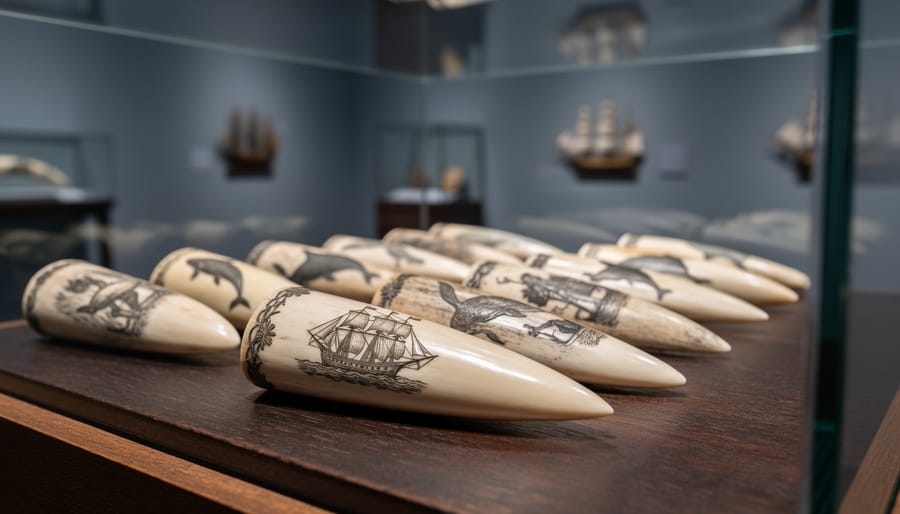
Scrimshaw art is the practice of carving intricate designs or images onto bone, ivory, or shell, a craft most famously associated with 19th-century whalers who transformed their long, monotonous voyages into opportunities for creative expression. During months at sea, sailors etched scenes of daily life, portraits of loved ones, ships under full sail, and wildlife onto whale teeth and walrus tusks, then rubbed ink or soot into the grooves to reveal their handiwork. What began as shipboard pastime evolved into a distinctive American folk art tradition, now recognized for its historical significance and technical skill.
The practice holds particular relevance in Canadian maritime history. Whalers operating from Arctic outposts and eastern Canadian ports contributed to the scrimshaw tradition, and their work now resides in museum collections across the country. Today’s collectors and historians value these artifacts not only for their artistic merit but also for what they reveal about whaling culture, maritime trade routes, and the daily realities of seafaring life in the 1800s.
This article explores scrimshaw from its origins in whaling communities through its transformation into a collectible art form. You’ll discover how sailors created these pieces using rudimentary tools, the different materials and styles that define authentic scrimshaw, and where contemporary examples can be found in Canadian museums and galleries. Whether you’re encountering the term for the first time or seeking deeper knowledge of this maritime craft, understanding scrimshaw opens a window into a vanished way of life preserved in bone and tooth.
What Scrimshaw Art Means
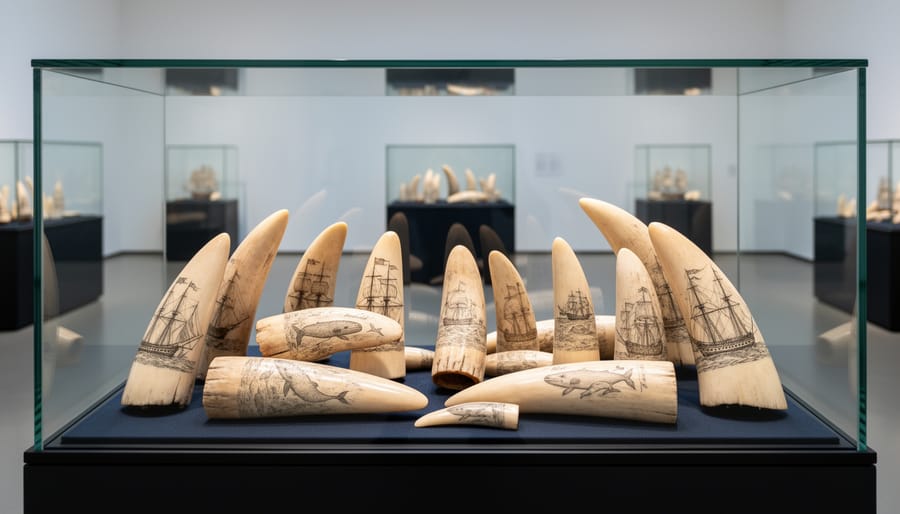
Scrimshaw art is the art of engraving or carving intricate designs onto whale teeth, whale bone, walrus ivory, and other marine mammal materials. Sailors created these pieces during the golden age of whaling, transforming what would have been discarded byproducts into detailed artworks that captured scenes of maritime life, loved ones left behind, and the natural world they encountered at sea. The craft required patience, steady hands, and a keen eye for detail, qualities honed during months of monotonous ocean travel.
The origin of the word scrimshaw etymology is disputed with theories ranging from Dutch or Old English roots to nautical slang for “waste time” or “idle away hours.” Regardless of its linguistic beginnings, the term came to define a uniquely maritime folk art that blended necessity with creativity.
- Scrimshaw
- The practice of etching, engraving, or carving decorative designs onto marine mammal materials such as whale teeth, bone, and ivory.
- Scrimshander
- The artist or craftsperson who creates scrimshaw, typically a sailor with time and raw materials available during whaling voyages.
- Substrate Materials
- The physical surfaces used for scrimshaw, including sperm whale teeth, whale jawbones, baleen, and walrus ivory, materials harvested from the whaling industry’s catch.
- Traditional Tools
- Simple implements sailors adapted for engraving: sail needles for fine lines, jackknives and files for carving, and whatever sharp objects were available aboard ship.
What sets scrimshaw apart from other decorative arts is its raw, functional origins and the constraints under which it was created. Unlike studio artists with specialized equipment, scrimshanders worked with makeshift tools on a rolling deck, using lampblack from whale oil or ink to fill their engravings and bring the images to life. The art form married resourcefulness with beauty, turning the spoils of a dangerous industry into lasting mementos of life at sea.
The Origins of Scrimshaw
Whaling Culture and Maritime Life
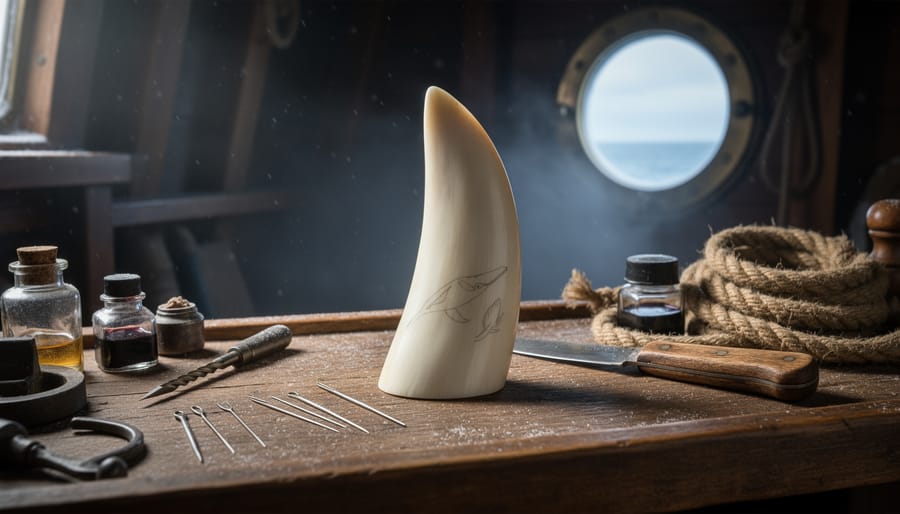
Whaling voyages demanded extraordinary endurance from their crews. Ships departed port for trips lasting anywhere from six months to four years, pursuing sperm whales and right whales across vast stretches of ocean. Between the intense, dangerous work of spotting, hunting, and processing whales, sailors faced long stretches of monotony. Days or weeks might pass with nothing but open water and routine shipboard tasks, creating a psychological challenge as daunting as the physical labour.
During this downtime, sailors turned to scrimshaw both as creative expression and practical occupation. The scrimshaw origins with whaling ships reflect this need for mental engagement during idle hours. Raw materials surrounded them: whale teeth and bones remained abundant after processing the catch for oil and baleen. Rather than discard these byproducts, crew members claimed pieces for personal projects, transforming waste into art.
Canadian waters played a significant role in this tradition. Atlantic whaling stations operated along the coasts of Newfoundland, Nova Scotia, and New Brunswick throughout the nineteenth century, with ships from these ports joining the global fleet. Further north, Arctic whaling expeditions penetrated Hudson Bay and the waters around Baffin Island, where Canadian, British, and American vessels hunted bowhead whales. These northern voyages proved especially grueling, often requiring crews to overwinter in ice-locked harbours, which extended both the isolation and the time available for creating scrimshaw. The Arctic environment also brought Canadian and American whalers into contact with Inuit communities, whose own sophisticated ivory carving traditions would subtly influence the sailors’ work.
Indigenous and Early Influences
Long before European whalers carved their first scrimshaw, Arctic peoples had already perfected the art of transforming bone and ivory into functional and spiritual objects. Inuit communities across northern Canada, Alaska, and Greenland spent centuries working with walrus ivory, whale bone, and caribou antler, creating tools, hunting implements, and ceremonial pieces that reflected both practical needs and Indigenous cultural perspectives about the natural world.
These traditions ran far deeper than European scrimshaw. Inuit carvers didn’t simply decorate surfaces, they embedded meaning into every line and curve, often depicting animals, hunting scenes, and ancestral stories that connected their communities to the land and sea. The techniques passed down through generations included intricate engraving, three-dimensional sculpture, and the use of natural pigments to enhance carved details.
When European and American whaling ships reached Canadian Arctic waters in the 1800s, two carving traditions met. Sailors encountered Inuit artisans whose skill with ivory far exceeded their own nascent efforts. This exchange flowed both ways: whalers adopted Inuit techniques for working curved surfaces and learned which tools cut bone most effectively, while some Indigenous carvers incorporated European motifs or created pieces for trade with visiting ships.
Understanding this context matters. Scrimshaw wasn’t born in a vacuum aboard whaling vessels, it emerged partly through contact with established Arctic artistic traditions rooted in Inuit ways of knowing and creating. The cross-cultural influence enriched both practices, particularly in Canada’s northern regions where the two traditions intersected most directly.
How Scrimshaw Art Works
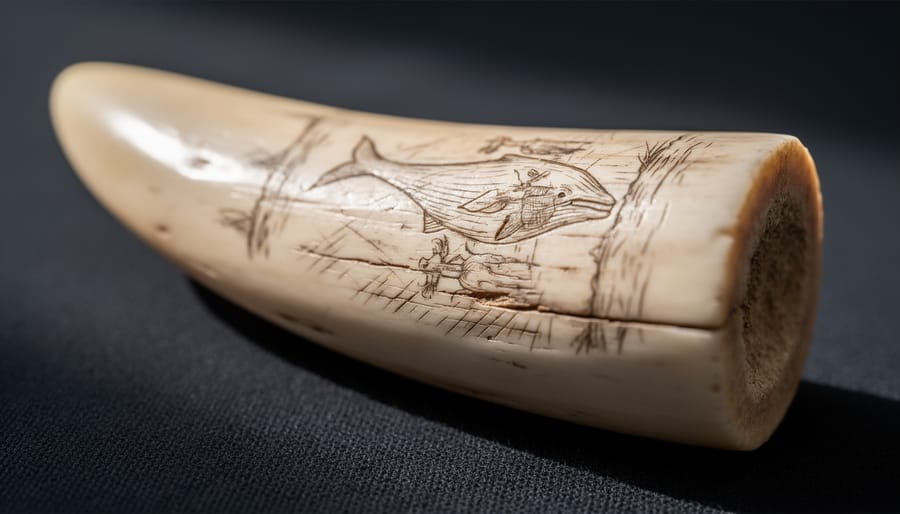
Creating scrimshaw required patience, steady hands, and improvisation with whatever tools a sailor had at hand. The process began with selecting and preparing a suitable piece of material, typically a sperm whale tooth, section of whalebone, or walrus ivory. Sailors first cleaned the raw material by scraping away any remaining tissue or membrane, then sanded and polished the surface smooth using sharkskin, sandstone, or whatever abrasive materials were available aboard ship. A well-prepared surface was essential because any irregularities would disrupt the fine lines of the engraving.
Once the surface was ready, the artist sketched the design. Some sailors drew freehand, while others traced images from books, newspapers, or illustrations they’d brought from home. Popular sources included ladies’ magazines, patriotic prints, and maritime charts. The artist would either draw directly onto the bone with pencil or charcoal, or transfer a design by pricking through paper with a needle to create a dot outline on the surface below.
The actual engraving came next. Sailors used whatever sharp implements they could find or fashion: sail needles stolen from the ship’s supplies, jackknives with carefully honed points, modified files, or even sharpened nails. Working the tool at various angles, the artist scratched fine lines into the surface, adjusting pressure and technique to create different line weights and textures. The curved surfaces of teeth presented particular challenges, requiring constant rotation of the piece and careful control to maintain consistent depth and spacing.
After completing the engraving, the artist rubbed lampblack, india ink, tobacco juice, or soot mixed with oil into the etched lines. This filling darkened the design and made it stand out sharply against the ivory background. The surface was then wiped clean and polished with cloth, leaving ink only in the grooves to create the final high-contrast image.
Forms and Styles of Scrimshaw
Traditional Maritime Subjects
Sailors etched what they knew and what they missed. Whaling scenes dominated scrimshaw work, harpooners in small boats pursuing massive sperm whales, ships cutting through Arctic ice, or the dangerous moment of the strike itself. These images documented their profession and the raw power they witnessed daily.
Ships appeared everywhere: from detailed rigging diagrams that captured every line and sail to portraits of a sailor’s home vessel, carefully rendered down to the figurehead. Some pieces showed entire fleets or favourite ports they’d visited.
Personal subjects revealed the loneliness of years at sea. Sailors carved portraits of wives and sweethearts from memory, sometimes working from daguerreotypes carried in their pockets. Patriotic symbols, flags, eagles, national emblems, connected them to distant homelands. In Canadian waters, sailors inscribed maple leaves alongside Union Jacks or French fleur-de-lis.
Marine life filled gaps between larger subjects: whales breaching, sea turtles, fish, and seabirds. These weren’t just decoration. Each image preserved moments from voyages, kept skills sharp during idle months, and created tangible links to the world beyond endless ocean horizons.
Functional and Decorative Objects
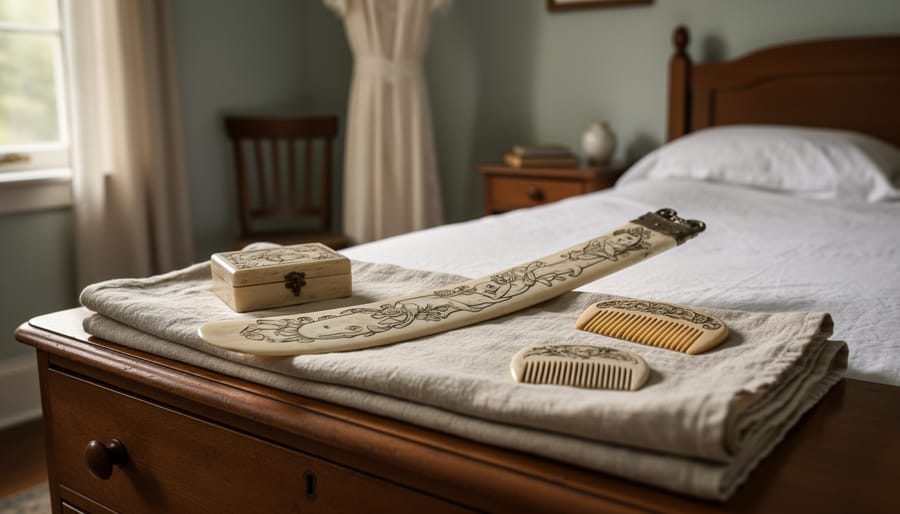
Scrimshaw sailors transformed everyday shipboard materials into an impressive range of objects that blurred the line between art and utility. While engraved whale teeth remain the most recognized form, whalemen carved and decorated dozens of items to serve practical purposes, pass idle hours, and create gifts for loved ones waiting at home.
Common scrimshaw objects included:
- Whale teeth engraved with ships, whaling scenes, or portraits
- Pan bones (whale jawbones) decorated with elaborate maritime imagery
- Jagging wheels for crimping pie crusts, often with ornate handles
- Corset busks slipped into stays as romantic tokens for wives and sweethearts
- Cane and umbrella handles carved with nautical motifs
- Sewing tools such as yarn swifts, crochet hooks, and bodkins
- Game pieces including dice, dominoes, and cribbage boards
- Jewelry boxes, snuff containers, and decorative trinkets
The distinction between functional and purely decorative scrimshaw often disappeared in practice. A jagging wheel might feature exquisite engraving that elevated a kitchen tool into an heirloom, while a whale tooth etched with a clipper ship served no purpose beyond artistic display. Corset busks held particular significance as intimate gifts, their hidden placement against a woman’s body making them deeply personal expressions of affection during years-long separations. Canadian whalers working Arctic waters created similar functional pieces, though their exposure to Inuit carving traditions sometimes influenced both form and decoration.
Regional Variations
Scrimshaw styles reflected the distinct cultural environments and whaling traditions of different regions. New England whalers, particularly those sailing from Nantucket and New Bedford, developed highly polished, detailed work characterized by precise nautical scenes, patriotic American imagery, and romantic portraits. Their pieces often featured elaborate borders and refined engraving techniques honed over multiple voyages.
Canadian Maritime scrimshaw displayed its own character, influenced by both British naval traditions and local seafaring culture. Atlantic Canadian pieces frequently incorporated regional ship designs, local landmarks, and sometimes French inscriptions reflecting the Acadian presence in the Maritime provinces. The work tended toward practical functionality, with decorated tools and useful objects predominating over purely decorative pieces.
Arctic whaling scrimshaw revealed the most distinctive regional variation. Working in northern Canadian waters, European and American whalers encountered Inuit ivory carving traditions that profoundly influenced their work. Arctic scrimshaw often incorporated Inuit design elements, stylized animal forms, hunting scenes, and simplified human figures, alongside traditional maritime subjects. The proximity to Indigenous artists created a unique cross-cultural artistic exchange, with some pieces showing clear blending of European engraving techniques and Indigenous aesthetic sensibilities. These northern examples represent scrimshaw’s most culturally hybrid expression.
Where Scrimshaw Is Used and Displayed Today
Canadian Museum Collections
Canadian institutions preserve scrimshaw as part of the broader narrative of maritime heritage and seafaring traditions. The New Brunswick Museum in Saint John holds one of the country’s most significant collections, featuring whale teeth and bone pieces etched by 19th-century Atlantic whalers. The Maritime Museum of the Atlantic in Halifax displays scrimshaw alongside ship models and navigation tools, contextualizing the art within the daily lives of sailors who worked these coastal waters.
The Canadian Museum of History in Gatineau includes scrimshaw in its exhibitions exploring Canada’s relationship with the sea, while smaller regional institutions contribute vital pieces to the national record. The Archives of Manitoba collaborates with museums to catalog and digitize maritime artifacts, making scrimshaw accessible to researchers and the public. These collections connect to broader patterns of Canadian cultural hub history showing how port cities developed distinct artistic traditions.
Visiting these museums offers direct encounters with authenticated pieces, allowing you to examine the fine detail and craftsmanship that photographs cannot fully capture. Many institutions provide interpretive programming that explains the historical context and creation techniques.
Modern Scrimshaw Practice
Contemporary scrimshaw artists keep this centuries-old tradition alive while navigating modern legal and ethical realities. Since the 1989 international ivory trade ban and restrictions on marine mammal products, practitioners work primarily with alternative materials: fossilized mammoth and walrus ivory, bone from cattle and other domestic animals, tagua nut (vegetable ivory), and synthetic materials designed to mimic traditional surfaces.
These artists study historical techniques carefully, using period-appropriate tools and methods to engrave intricate maritime scenes, wildlife, and custom designs. Many specialize in reproducing authentic 19th-century styles, creating pieces that honor the craft’s heritage while respecting contemporary conservation ethics. Some collaborate with Indigenous voices today to distinguish sailor scrimshaw from ongoing Indigenous carving traditions, which have separate cultural and legal frameworks.
Legal scrimshaw today requires documented provenance for any authentic ivory, typically limited to pre-ban antiques or legally harvested materials with proper permits. The International Scrimshaw Collectors Association and similar organizations educate collectors about authenticity, legality, and ethical sourcing. Modern practitioners demonstrate that scrimshaw’s artistic merit endures independent of controversial materials, ensuring this maritime folk art continues for future generations.
Common Questions About Scrimshaw Art
Is scrimshaw still legal to buy and sell?
Authentic antique scrimshaw created before 1973 can be legally owned and sold in most jurisdictions, but international trade in marine mammal ivory is heavily regulated under CITES treaties. Modern scrimshaw must use legal alternatives such as fossilized ivory, cattle bone, or synthetic materials rather than protected whale or walrus ivory.
How can I tell if scrimshaw is authentic?
Genuine antique scrimshaw shows natural aging patterns including yellowing of the ivory, fine crackling called “crazing,” and ink settled deep into engraved lines rather than sitting on the surface. Authentic pieces also display hand-tool marks with slight irregularities, while modern fakes often show machine precision or use polymer resins that feel lighter and warmer to the touch than real ivory or bone.
What determines the value of scrimshaw?
Value depends on age, artistic quality, subject matter, condition, provenance, and historical significance. Exceptional pieces depicting detailed whaling scenes or documenting specific voyages command premium prices, while simpler geometric designs are more modest. Canadian examples with documented connection to regional whaling operations or ties to Canadian cultural identity often interest collectors focused on maritime heritage.
How should scrimshaw be preserved?
Keep scrimshaw away from direct sunlight, which causes yellowing and brittleness, and maintain stable humidity levels since ivory and bone expand and contract with moisture changes. Handle pieces minimally and with clean hands, store them in acid-free tissue or cloth rather than plastic, and never attempt to clean or restore antique scrimshaw without consulting a professional conservator trained in organic materials.
Collectors new to scrimshaw should work with reputable dealers who provide documentation about age and legality, and consider joining organizations focused on maritime history where experienced members share knowledge about authentication. Museum visits offer the best education, letting you examine verified examples up close and develop an eye for the distinctive qualities that separate genuine sailor-crafted work from reproductions. Many Canadian maritime museums offer workshops or public programs that teach scrimshaw history and conservation, giving enthusiasts hands-on learning opportunities while supporting institutions that preserve this unique art form for future generations.
Scrimshaw stands as a testament to human creativity flourishing even in the harshest conditions. What began as sailors’ attempts to fill endless hours at sea became an enduring art form that captures the spirit of maritime life with remarkable intimacy. Each engraved whale tooth or carved ivory piece tells two stories: the image etched on its surface and the patience of the hands that created it during months-long voyages far from home.
For Canadians, scrimshaw represents more than distant whaling history. It connects directly to our Atlantic and Arctic maritime heritage, where whalers worked these waters and Indigenous artisans had already perfected bone and ivory carving centuries earlier. The collections housed in Canadian maritime museums preserve this dual legacy, offering tangible links to the sailors who sought fortune and adventure in our northern seas.
Visiting these collections transforms scrimshaw from historical curiosity into lived experience. You’ll stand before intricate etchings that sailors completed by lamplight in cramped quarters, their detail astonishing given the crude tools and rolling decks. Maritime museums across Atlantic Canada and institutions like the Canadian Museum of History safeguard these works, many acquired through Lakes & Woods’ collaborations with historical societies nationwide.
Sign up for our newsletter to discover more Canadian history stories that bring the past within reach. Better yet, plan your visit to one of Canada’s maritime museums and see scrimshaw firsthand, the craftsmanship speaks across centuries.